What to Eat in Nuremberg: Six Things, and Which Ones Matter
The six things
1. Nuremberg bratwurst
Finger-sized, seven to nine centimetres, seasoned heavily with marjoram, grilled over beechwood. They come six, eight, ten or twelve to a pewter plate with sauerkraut and horseradish, or three in a roll from a street hatch. They are the thing to eat here and they are protected by law. Where to eat them and what the protection means.
2. Rotbier
Nuremberg’s own beer style: a dark amber lager, malty, not bitter, made here for centuries and nearly extinct by the 1970s before a handful of brewers brought it back. Order a Rotbier rather than a Helles and you are drinking the local thing rather than the Munich thing.
3. Blaue Zipfel
Bratwurst poached in vinegar, wine and onion instead of grilled. It sounds wrong and it is excellent — sharp, cold-weather food, served in the broth. Almost no visitor orders it, which is a shame.
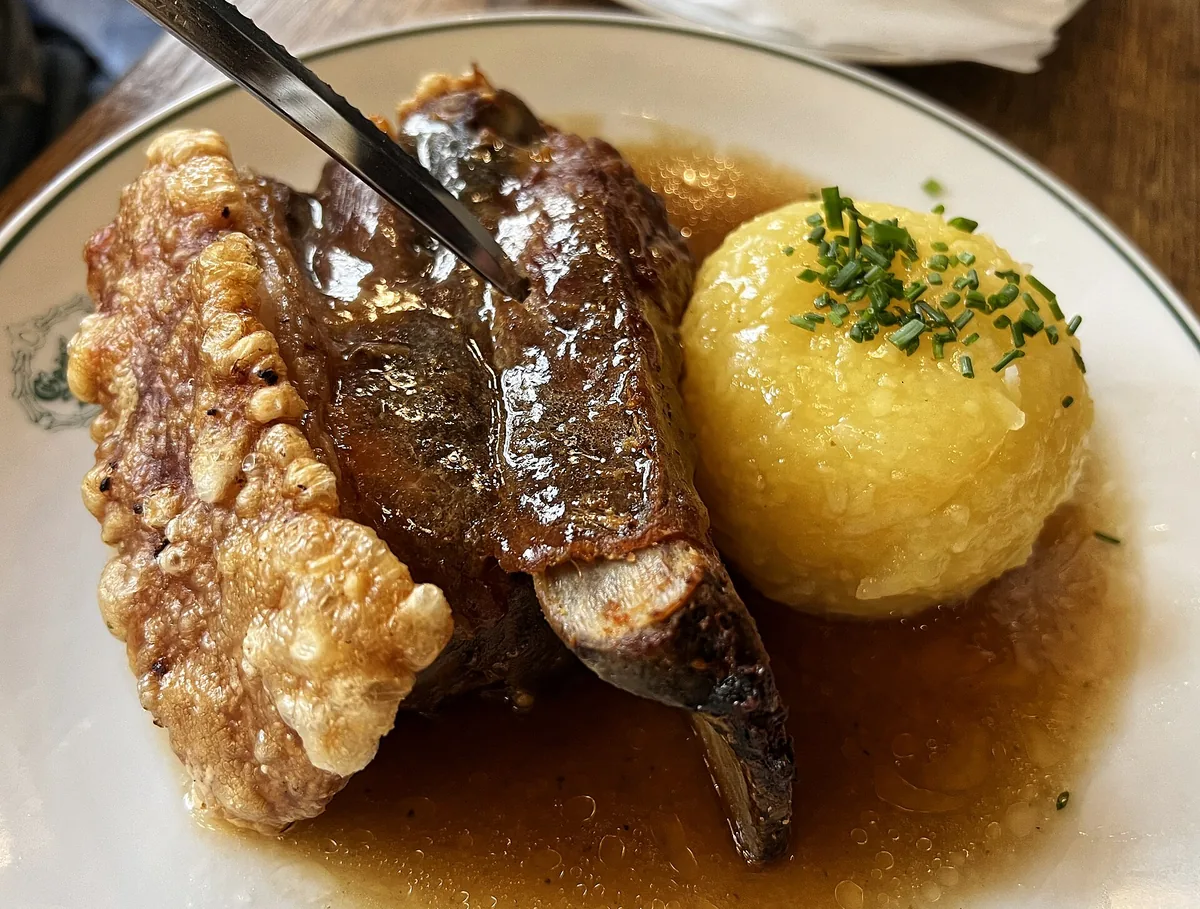
4. Schaeufele
Pork shoulder roasted with the bone in and the crackling scored into diamonds, with a potato dumpling and dark gravy. This is the Sunday plate of Franconia and it is enormous. Order one between two people if you are not very hungry.
5. Lebkuchen
Made here all year, sold everywhere in December, and much more interesting than the tourist tins suggest once you know that two of the words on the box mean completely different things. Nuernberger versus Elisen, and why it changes the price.
6. Zwetschgenmaennle
Little figures made of dried prunes and figs on a wire frame, sold at the Christmas market since the eighteenth century. They are a souvenir rather than a snack, and they are the one Christmas market object that is actually from here.
What things cost
| Item | Typical price |
|---|---|
| Drei im Weggla from a street hatch | Around EUR 4.50 |
| Six bratwurst with kraut, sit-down | EUR 10–12 |
| Twelve bratwurst with kraut | EUR 16–19 |
| Schaeufele with dumpling | EUR 15–19 |
| Blaue Zipfel | EUR 11–14 |
| Half litre of Rotbier | EUR 4.50–5.50 |
| Lebkuchen, decent Elisen, per piece | EUR 2–3.50 |
The cheapest good meal in Nuremberg is three bratwurst in a roll from the hatch beside St Sebald, eaten standing on the street for about four euros fifty. It is not a compromise version of the sit-down plate — the sausages come off the same grill.
Doing the food yourself
You do not need a food tour to eat well here, and it would be dishonest to pretend otherwise. The list above is six items long, the restaurants that do them well are on every street in the old town, nothing needs booking except on market weekends, and a full meal with beer runs under twenty euros. Walk in anywhere with a wood-fired grill visible from the door and you will eat properly.
What a food tour adds, when it adds anything
Two things, and only two. The first is the small producers — a Lebkuchen bakery’s back room, a butcher who will explain the marjoram, a brewer pouring Rotbier and telling you why it nearly died out. Those doors do not open to walk-ins. The second is that Franconian food is regional in ways that are invisible from a menu: why the sausages are small, why the beer is red, what Schaeufele is doing on every card. That context is the product, not the tastings.
If you already know you want to eat your way round rather than sightsee, it is good value. If you want dinner, book a table instead and save eighty euros.
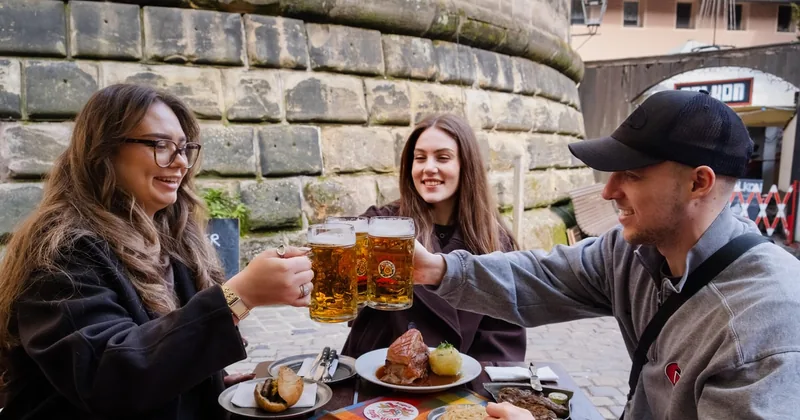 Full meal
Nuremberg Old Town Food Tour with Full Meal & Local Drinks
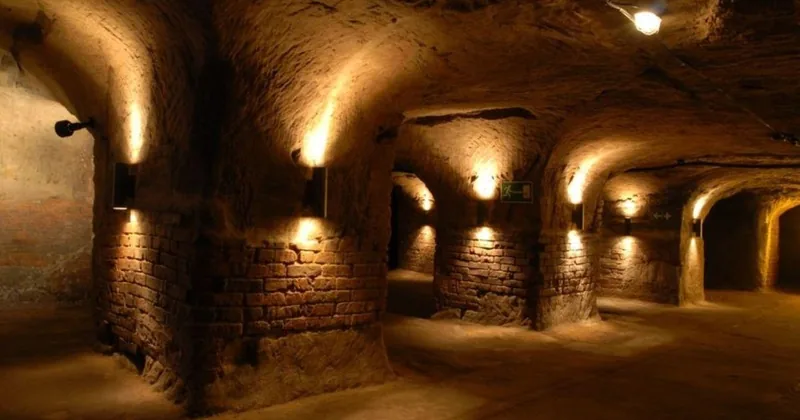 Red Beer Tour
Nuremberg: The Red Beer Tour
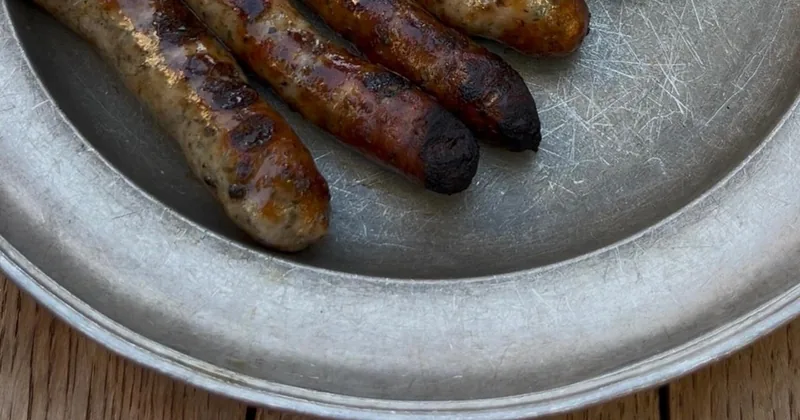 Bratwurst museum
Nuremberg: Bratwurst tour with admission to the Bratwurst Museum
All the food and drink tours compared, including the cheap ones.
Then what
The bratwurst, properly · The Lebkuchen, properly · What a day here costs
Frequently asked questions
What food is Nuremberg famous for?
Nuremberg bratwurst — small marjoram-seasoned sausages grilled over beechwood — and Lebkuchen. Both are protected by EU origin rules. Locally you should also try Rotbier, the city's dark amber beer style, and Schaeufele, roast pork shoulder with crackling.
What is Drei im Weggla?
Three Nuremberg bratwurst in a bread roll, sold from street hatches for around EUR 4.50. It is the standard cheap lunch here and the sausages come off the same grill as the sit-down plates.
Is Franconian food the same as Bavarian food?
No. Franconia is administratively Bavarian but culinarily separate. The sausages are small rather than large, the beer leans dark and malty rather than pale, and the roast is Schaeufele rather than Schweinshaxe.
Do I need to book restaurants in Nuremberg?
Rarely, except on December weekends and during the big trade fairs, when the old town fills up. The rest of the year you can walk in almost anywhere.