Documentation Centre Nazi Party Rally Grounds: what is on show now
Why the guidebooks are out of date
The centre closed its long-running permanent exhibition, Fascination and Terror, for a major rebuild and ran a compact interim exhibition in its place for several years. A great deal of published advice, in print and online, still describes one or other of those.
What is there now is the new permanent exhibition, in trial operation since May 2026, in a rebuilt building with a new ground floor, a step-free entrance and a proper foyer. The formal opening is on 4 November 2026. In practice "trial operation" has meant it is open and you can see it; if you want the ceremonial version, that is the November date.
What it costs and when it is open
| Ticket | Price |
|---|---|
| Adult | EUR 7.50 |
| Reduced | EUR 2.50 |
| Family | EUR 8 |
| Groups of 15 or more, per person | EUR 7 |
| School classes, per pupil | EUR 2 |
Open Monday to Friday from 9am and at weekends from 10am, closing at 6pm. It is also covered by the Nuremberg Card. Allow about ninety minutes, and more if you use the audio guide properly, which is included and is one of the better ones in Germany.
The building is part of the exhibit
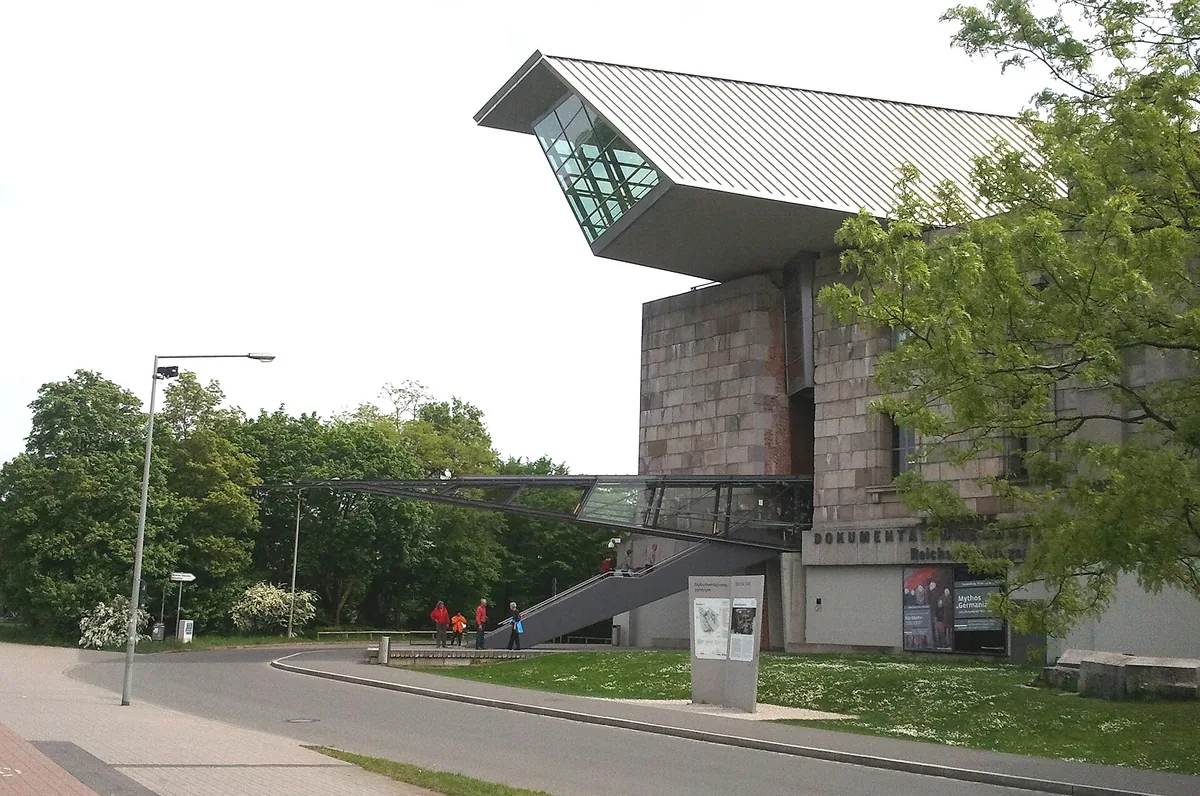
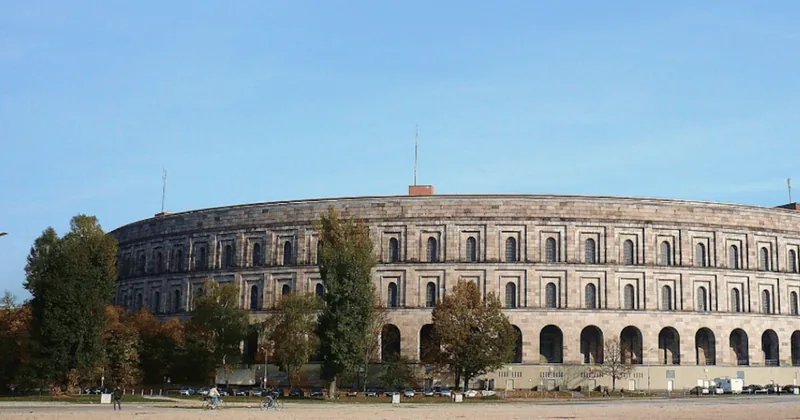
The centre is not a purpose-built museum. It occupies the north wing of the Congress Hall, the largest surviving Nazi building anywhere — an unfinished brick horseshoe modelled on the Colosseum and intended to seat fifty thousand. It was never roofed and never used.
The architect Gunther Domenig drove a glass and steel walkway diagonally through the existing structure, cutting across its axes rather than following them. You enter along that spike. It is a deliberate argument in architectural form, and it is the first thing the museum says to you before a single caption does.
What is inside
The exhibition covers the rallies themselves — how they were staged, what it was like to be in the crowd, and the violence that the staging existed to serve. It is bilingual German and English throughout. There is a large media installation that runs the site through time from 1918 to the present, and a great deal of photography and planning material that puts the grounds in the context of the city around them.
It is a serious museum and it is not a comfortable one. It is also, for most visitors, the thing that makes the rest of the site work: walk out of the door and you are already standing on the rally grounds, and having been inside first is the difference between reading them and looking at grass.
Museum first, grounds second — always in that order. The Zeppelinfeld is a twenty-five minute walk round the Dutzendteich from the museum door and it means something completely different once you have been in.
Do you need a guide as well?
Not for the museum. It is well captioned, the included audio guide is good, and you can take as long as you like — which for this material matters.
The case for a guide is the ground outside, which has almost no labelling and is far too big to read on your own. Most guided tours combine the two: the museum with a guide, then the walk out across the field where the guide earns their fee. Several also add the Palace of Justice with transport, which solves the six-kilometre gap between the two sites.
 Rally grounds + trials
Nuremberg: Tour of the Nazi Rally Grounds and the Nuremberg Trials
 Courtroom 600
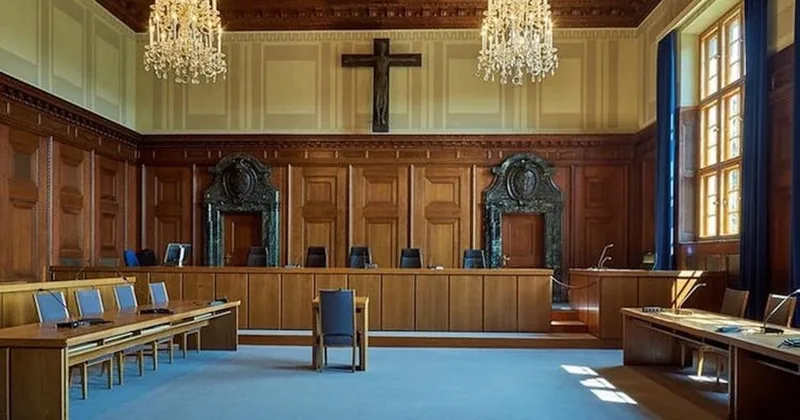
Nuremberg: WWII Tour, Courtroom 600 and 3rd Reich Sites
 Hotel pick-up
Nuremberg: World War II Tour with Hotel Pick-up
Full comparison on Nazi-era tours compared.
Frequently asked questions
Is the Documentation Centre in Nuremberg open?
Yes. The new permanent exhibition, Nuremberg and the Nazi Party Rallies, has been open in trial operation since 22 May 2026, with the formal opening on 4 November 2026. Guidebooks describing the old Fascination and Terror exhibition or the interim show are out of date.
How much is the Nuremberg Documentation Centre?
Adult admission is EUR 7.50 and reduced EUR 2.50, with a family ticket at EUR 8 and school classes at EUR 2 per pupil. It is also included in the Nuremberg Card.
How long do you need at the Documentation Centre?
About ninety minutes for the exhibition itself, longer if you follow the audio guide closely. Add two to three hours if you walk the rally grounds afterwards, which is what most visitors do and the right order to do it in.
How do you get to the Documentation Centre from Nuremberg station?
Tram 8 from the Hauptbahnhof to the Doku-Zentrum stop, about fifteen minutes on an ordinary city single ticket. The S-Bahn to Frankenstadion is an alternative. The museum is directly in front of you when you get off.
Is the Documentation Centre suitable for children?
It is aimed at older schoolchildren and adults. The material is serious and the imagery is difficult in places. School groups from around thirteen upwards are the museum's core audience and it is set up for them; younger children will get little from it.